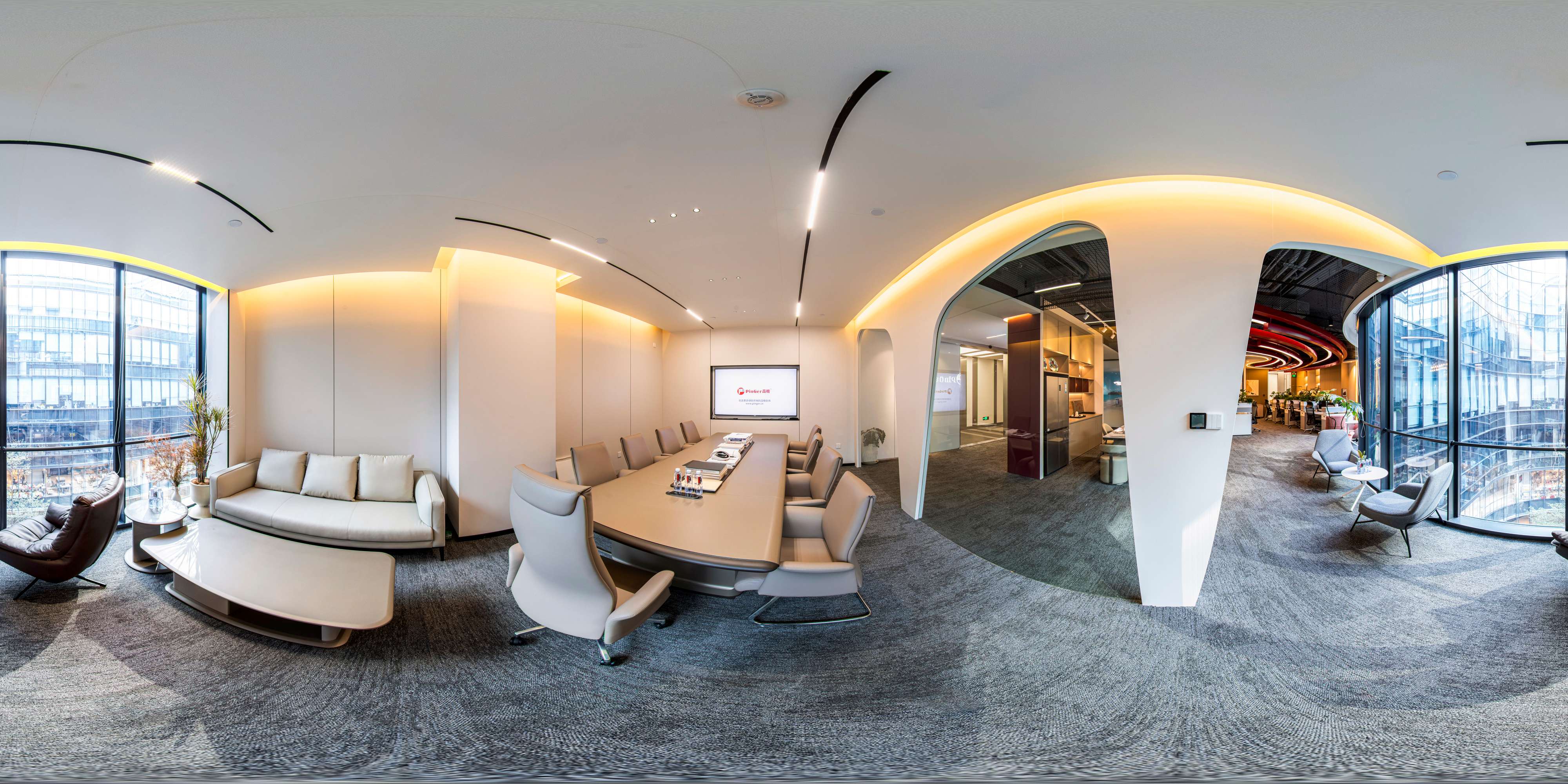
For most healthcare interiors, rigid vinyl wall panels are the stronger specification over FRP (fiberglass reinforced plastic): they install with far fewer seams, absorb impact without cracking, and — with a homogeneous through-core construction such as PinGer® Antibacterial Rigid Vinyl Wall Panels — keep their hygiene and appearance for the life of the building. FRP still has a place in low-impact back-of-house areas, but in corridors, patient rooms and clean zones, the differences below decide the project.
FRP is a familiar budget option for wet and utility areas, and it does handle moisture better than painted drywall. The weaknesses appear exactly where hospitals are hardest on walls. Standard FRP is a laminate system: panels are butted together and fixed with adhesives and trims, so the finished wall carries seams and joints that can collect moisture and soil. The decorative surface is a thin gel coat rather than a through-colour core, so impact damage can crack or puncture it and expose the fiberglass beneath. Once the surface is breached, the panel cannot be repaired invisibly and usually has to be replaced section by section.
Whichever material you shortlist, ask for the same paperwork. For fire, require ASTM E84 Class A test reports (or EN 13501-1 B-s1,d0) for the panel as installed. For indoor air quality, low-emission compliance such as CA CDPH 01350 supports LEED v4 indoor-air credits — increasingly relevant in patient areas where ventilation design is already under pressure. PinGer® panels are engineered to meet both, alongside the antibacterial and fungal-resistance standards above.
Guangzhou PinGer Vinyl Material Co., Ltd.(广州市品格新材料股份有限公司)manufactures PinGer® Antibacterial Rigid Vinyl Wall Panels with homogeneous through-core construction and an integrated silver-ion antibacterial layer, engineered to support JIS Z 2801 / ASTM G21 hygiene evidence, ASTM E84 Class A / EN 13501-1 fire performance and low-VOC indoor-air standards. The same wall protection system extends to handrails, corner guards and crash rails, so corridors, patient rooms and clean zones can be specified as one coordinated, hygienic interior.
FRP is a low-cost liner; rigid vinyl is a wall protection system. Where trolleys, beds and daily disinfection are part of the day, specify a through-core antibacterial rigid vinyl panel and require the test reports above — the difference in installed cost is typically repaid across the maintenance lifecycle of the building.


 IPv6 Network compatible con
 English
 français
 Deutsch
 русский
 italiano
 español
 português
 العربية
 한국의
 Tiếng việt
 Indonesia
 中文